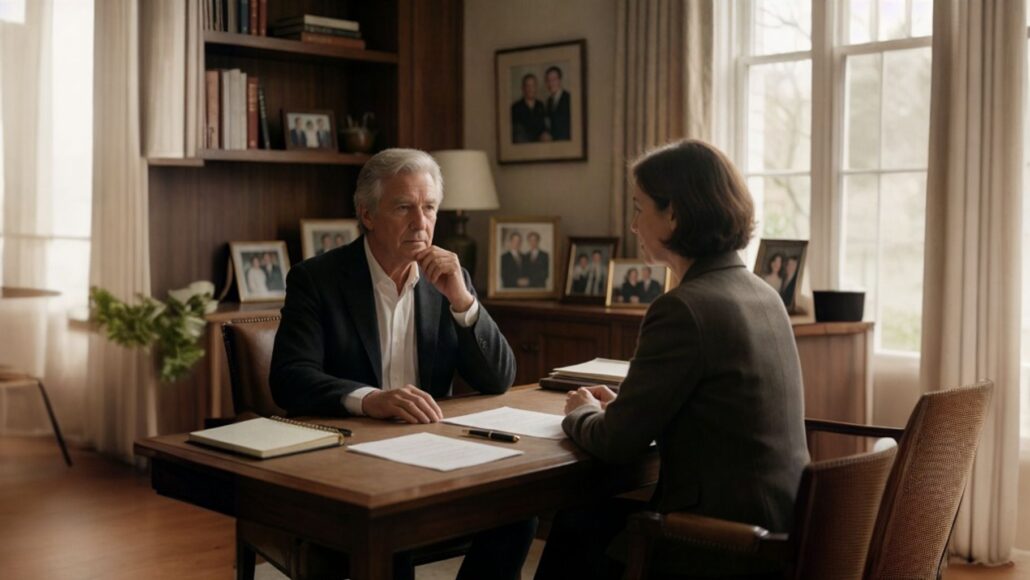
Families of significant means are often extremely well prepared on paper.
They have strong legal counsel and thoughtful tax planning, as well as trust structures, governance documents, succession plans, and carefully designed frameworks for continuity. This architecture helps ensure that assets are protected and the transfers are structured.
And yet, something essential is often still at risk, for formal planning cannot preserve the person: the private reasoning behind major decisions, the inner logic of a life, and the hard-won perspective that shaped the wealth in the first place.
That gap matters more than most families realize.
When the structure is sound but the understanding is thin
By the time a family begins transferring substantial wealth, there is rarely a shortage of technical expertise. Lawyers, accountants, wealth managers, trustees, and family-office professionals are involved. The planning is meticulous, and the structures are excellent.
But technical excellence does not automatically create human continuity.
A daughter may inherit the business. A son may inherit the portfolio. Grandchildren may inherit the benefits of a lifetime of discipline and sacrifice. But what have they inherited of the person who built the wealth?
They may know the polished public biography and the list of successes. But what did he believe? What did he fear? What did he learn too late? What did he want his family to understand about him?
These are not sentimental questions. They are questions of continuity.
When the answers are missing, families end up with excellent planning, but thin understanding. They know what was built, but not why. They inherit responsibility without context. They get the results of a life without access to the thinking that shaped it.
That is not a failure of formal planning. It is simply outside its scope.
The limits of technical documents
A trust can distribute capital, and a governance structure can define roles. A succession plan can outline responsibility, while an estate plan can determine what passes to whom and when.
But none of these documents can convey how a founder thought. Nor can they convey the emotional cost of building a company, the private uncertainty behind public success, the values that shaped difficult decisions, or the lessons he most hopes the next generation will carry forward.
What families often need in addition to the plan
Families do not inherit just assets. They inherit context, too, but often in unformed ways: assumptions, silences, beliefs, family myths, half-understood stories, and fragments of explanation. Sometimes they inherit money without ever fully understanding the temperament, philosophy, or emotional reality behind it.
Without that context, wealth can feel abstract or merely transactional. Responsibility feels imposed rather than understood. Stewardship becomes technical rather than personal.
But when a family has access to the founder’s honest private voice — not the polished public one — something changes. They begin to understand not only what was built, but what it meant. Not just what was passed down, but what was lived through. And not simply what should be managed, but what should be remembered.
The moment many advisors recognize
The best advisors often sense this shift before anyone names it.
At a certain point, the conversation changes. The client is no longer focused only on growth, protection, and transfer. He becomes more reflective. He talks less about expansion and more about meaning. He wants to be understood, not merely remembered.
He is no longer asking only how to preserve the estate. He is beginning to ask how to preserve something of himself.
That is the moment when the family’s needs begin to exceed what planning alone can capture.
Where a legacy memoir fits
A legacy memoir is not a replacement for formal planning, nor is it a decorative extra. It serves a different function entirely.
At its best, it preserves what documents cannot: the founder’s voice, values, and lived experience. The stories behind the judgment and the failures behind the discipline. The private reflections behind the public life.
It gives children and grandchildren access to a fuller inheritance, including not only assets and structures, but also explanation, memory, and meaning.
The deeper legacy is not just what a person built. It is how he understood what he built, why he made the choices he made, and what he hopes those who come after him will carry forward.
Formal planning is essential, but it is not the whole of legacy. Preserving meaning requires something more personal in the form of a document concerned not only with transfer, but with transmission.
For some families, that distinction becomes clear only after the person is gone, when the unanswered questions begin.
For others, it becomes clear just in time. If you sense that moment approaching, it may be worth a conversation.