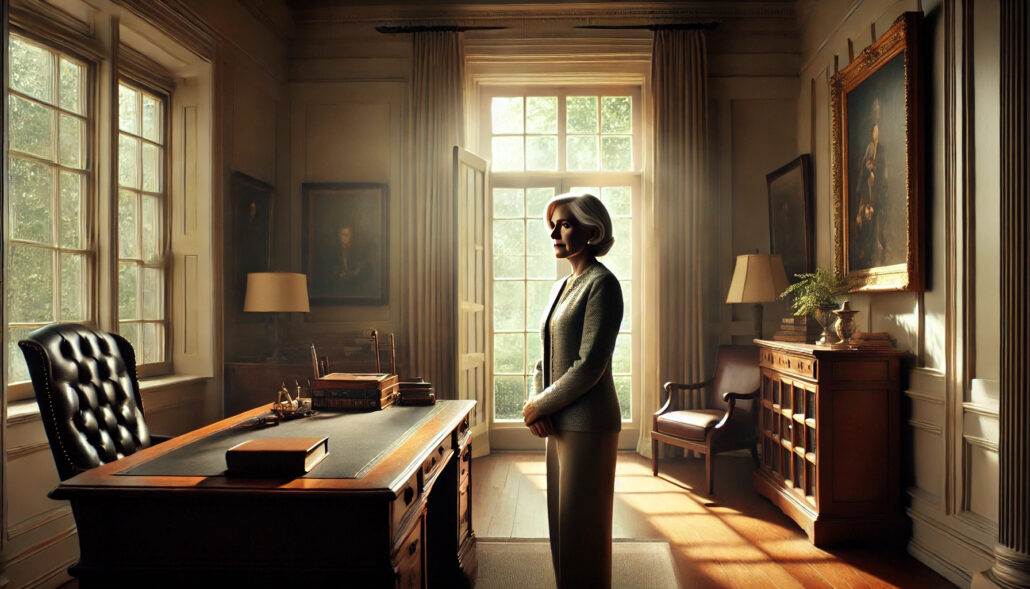
For many people, a title becomes a kind of shorthand. It’s a quick way of explaining who they are and how they’ve moved through the world.
The title carries weight, purpose, and history. It can open doors, clarify status, and provide structure to a life that moves quickly. But titles also become armor. They protect us, letting us move through conversations and situations without having to reveal too much.
But then, one day, the title is gone.
For some, it happens suddenly with retirement, transition, succession, or the cessation of work. For others, the shift comes slowly as they ease away from roles. But in either case, the moment arrives when a person is no longer introduced, and no longer responded to, by the role they’ve held for decades.
When this happens, something subtle, yet profoundly important, begins.
Without the title, stories rearrange themselves. Memories that once felt peripheral move to the center and vice versa. The experiences that shaped us emotionally begin to matter more than the achievements that shaped us professionally. What once read as a résumé becomes a life.
Clients have told me that after retirement, they remember things differently. Moments they hadn’t thought about in years come back with surprising clarity. Certain relationships take on new meaning. Failures lose their sting. Successes feel less like endpoints and more like stepping stones.
It isn’t that the title had blocked these stories; it simply organized them in service of the title. Once that organizing principle falls away, the deeper narrative begins to emerge.
This is one of the reasons memoir becomes so powerful later in life. Not because we finally have time to write. Rather, because we finally have perspective. The story underneath the title has space to emerge and grow.
And in that space, clarity appears. Not all at once, but slowly, like a picture developing in a darkroom.
Some people find this shift disorienting, while others find it liberating. Many find it emotional. But almost everyone recognizes that the story they carried while holding the title is not the same story they carry after releasing the title.
The work of memoir is, in many ways, the work of learning to listen to the life beneath the role.
And when we do, we often discover that the most meaningful parts of the story were never tied to the title at all.