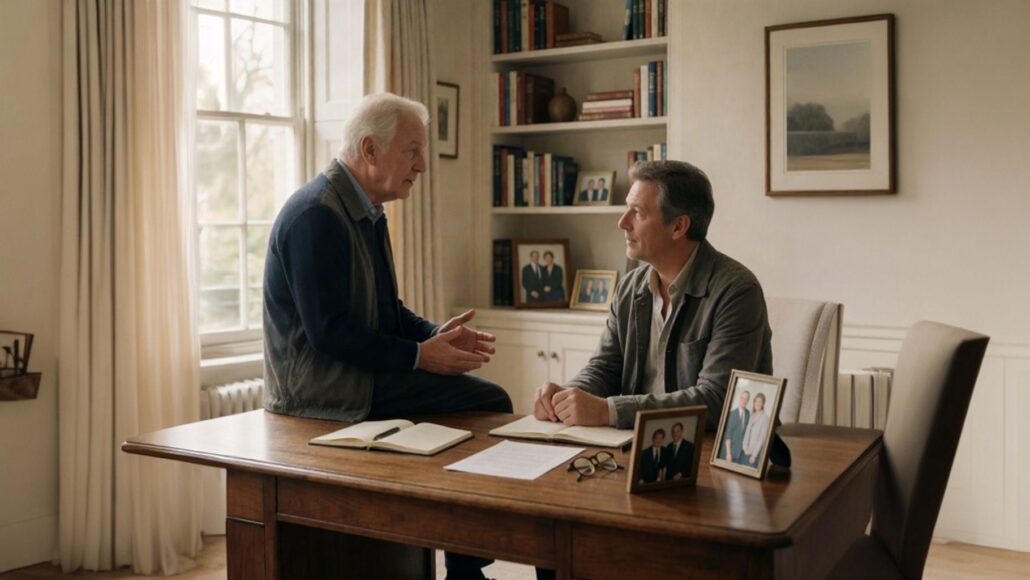
A legacy memoir does something different by preserving voice, reflection, and the private reasoning that shaped a public life. It answers a question that formal planning cannot fully answer: What does this life mean?
Children and grandchildren do not always need more facts and figures. They need context, explanation, and humanity. They need to hear not only what happened, but how the person who lived it understood it.
What readiness often sounds like
Clients who are ready for a legacy memoir rarely know how to identify what they want. They reach for it in fragments:
“I want my family to understand how I think.”
“There are things I’ve learned that won’t fit into any formal document.”
“I don’t want everything important to disappear.”
Sometimes the signals are subtler. A client becomes more reflective, less interested in achievement and more interested in interpretation. They return again and again to certain turning points. They speak with more feeling about regret, sacrifice, gratitude, and what they hope their grandchildren might one day understand.
They are not asking for a memoir in the literary sense. They are asking, whether they know it or not, for a way to preserve the deeper record of a life.
Why gatekeepers often recognize the moment first
Advisors, family-office leaders, estate attorneys, and executive coaches are frequently in a unique position, for they hear the reflective comment in the middle of a planning conversation. They notice when a client begins talking less about structures and more about the intangibles they worry the family will not inherit.
That does not require being a memoir expert. It simply requires recognizing the signal:
The client who wants to be understood, not simply remembered…
who is thinking more about family than reputation…
who senses that some of what matters most has never been said in a durable way.
A legacy memoir, at its best, is not a record of events. It is an act of interpretation — a way for a person to say: This is what I lived. This is what I learned. This is what I hope you will understand when I am no longer here to explain it.
If you are hearing these conversations
If any of this resonates with a current client relationship, it may be worth a conversation. The moment rarely announces itself clearly. But when it arrives, it deserves more than a passing nod.