
For Advisors
Help Clients Preserve More Than Wealth
You have spent years advising a founder, CEO, entrepreneur, or family. Now, two crucial issues arise, one for the founder and one for the advisor.
For the founder, it is whether the next generation will understand the story behind the wealth: the judgment, sacrifices, risks, values, and relationships that helped preserve it.
For the advisor, it is continuity. The heirs may inherit the estate, but not the trust that made the advisory relationship possible.
A private legacy memoir can help with both.
The Advisor's Challenge
The founder may have trusted the advisor deeply, but the next generation has little sense of why that relationship matters.
That’s why, according to Cerulli Associates, over 70% of heirs do not keep their parents’ or benefactor’s financial advisor.
A legacy memoir gives advisors a thoughtful way to deepen trust, demonstrate broader value, and support intergenerational continuity.
A legacy memoir cannot guarantee continuity. But it can help preserve the story, values, and trusted relationships that give continuity a better chance.
Help Clients Take the Next Step
Legal and financial instruments can transfer ownership, but they cannot transfer meaning. Neither can they convey the importance of the relationship between founder and advisor.
A private legacy memoir can help close that gap.
By introducing the idea of a legacy memoir, an advisor gives the client a way to preserve the human story behind the wealth — and gives the family a richer look at the values, judgment, and experience that shaped it.
It also helps the next generation understand the trusted relationships that supported the family’s success over time.
Four Ways a Legacy Memoir Can Help Advisors Serve Clients More Fully
Deepening Trust
Raising the idea of a legacy memoir to the right client is an important signal.
It tells the client that you view the wealth as the result of years of discipline, risk, judgment, sacrifice, ambition, failure, and responsibility — not merely as assets to be managed.
It is a way of quietly saying: I know that your story matters.
Properly positioned, this message can be absorbed by the heirs, improving the odds of generational retention.
Demonstrating Value Beyond Investment Performance
A legacy memoir gives the advisor a meaningful way to expand the conversation.
It moves the relationship beyond reports and documents into questions of values, judgment, memory, and family identity.
In the eyes of the right clients, the advisor is no longer simply managing money.
The advisor becomes someone who helps the client think carefully about what the money is for, what the family has been built around, and what should be carried forward.
Supporting Generational Client Retention
One of the most difficult challenges for advisors is maintaining the relationship after wealth passes to the next generation.
The founder may trust the advisor deeply, but the children may not know the advisor at all.
A legacy memoir cannot guarantee continuity.
However, when the founder’s story is preserved, the next generation is more likely to understand not only the wealth but also the trusted relationships that helped sustain it.
Protecting the Legacy
Estate plans, trusts, and tax strategies are necessary. But none of these can fully preserve the founder’s voice.
A legacy memoir gives the next generation something no legal document can provide — a personal account of where the family’s wealth came from, what it cost, what it meant, and what the founder hoped it would make possible.
Documents can transfer ownership, but a memoir helps transfer meanings.
How Advisors Introduce the Idea
The idea of writing a legacy memoir can be introduced gently, as part of a larger conversation about family, continuity, and meaning.
An advisor might say:
“Much of our work is designed to help your family receive and manage the wealth you have created. But there is another question worth considering: will they also understand the story and values behind it?”
Or:
“You have done the work to protect the estate. It may also be worth thinking about how to preserve the voice and life experience behind it.”
Or:
“For some families, the most meaningful inheritance is not just financial. It is the founder’s story; the decisions, lessons, and values that explain how the wealth came to be.”
The conversation need not be elaborate. It simply needs to open a door.
For advisors who would like a simple way to understand or explain the concept, we’ve prepared a brief guide to what a legacy memoir is, how it differs from a standard memoir or autobiography, and why it can matter in conversations about family continuity.
What the Client Receives
A Taylor-Fox legacy memoir is a privately commissioned book created for the client, the family, and future generations.
It is not a collection of anecdotes, a corporate history, or a résumé.
Instead, it is a carefully written account of a life, shaped through extensive interviews and refined into a narrative that preserves the client’s voice, judgment, values, and experience.
The finished memoir may include:
- The founder’s personal story
- The building of the business, career, or family enterprise
- The choices and turning points that shaped the wealth
- The failures, risks, sacrifices, and lessons learned along the way
- The values the client hopes will guide future generations
- The client’s reflections on work, money, purpose, responsibility, and legacy
For many families, the result is not simply a book. It is richer than that. It is a private inheritance of memory, meaning, and voice.
How Taylor-Fox Works with Advisors
Advisors can be as involved — or as uninvolved — as they and the client prefer.
Some advisors simply introduce the idea and step back.
Others remain part of the early conversation, helping the client understand why a legacy memoir may be valuable in the broader context of family continuity and estate planning.
Our role is to make the process discreet and thoughtful. We handle the interviews, structure, writing, revision, and book development.
The client is never asked to write the book, and the advisor is never asked to manage the project.
Why Taylor-Fox?
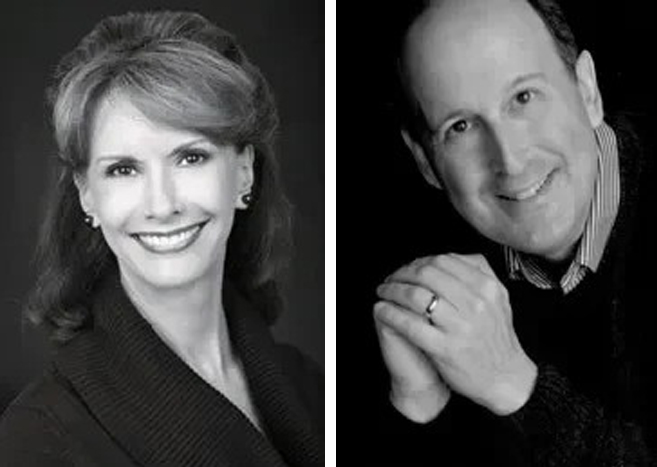
Nadine Taylor & Barry Fox create private legacy memoirs for high-net-worth individuals and families who want to tell the deeper story behind the life they have built.
That story is rarely only about business. It may include ambition, risk, reinvention, loss, judgment, generosity, mistakes, faith, discipline, or the decades-long, hard-won education that shaped the person behind the estate.
Our job is to listen carefully, ask the right questions, find the underlying shape of the life, and write a book that feels true to the person who lived it.
A Thoughtful Resource for the Right Client
Only certain clients need a legacy memoir. They include:
- The founder who has begun speaking more often about grandchildren.
- The business owner who wants the family to understand what it took to build the company.
- The patriarch or matriarch who worries that the next generation sees the money but not the meaning behind it.
- The client who has completed the planning but still feels something vital has not been said.
A legacy memoir helps answer the question that planning documents cannot fully address: Who was the person behind the wealth?
Case Histories
Passing Life Lessons to the Next Generation
For a client who had served in the C-suites of two different Fortune 500 companies, we crafted a legacy memoir specifically designed to pass on lessons on living your best life to his four children.
Preserving the Story Behind a $2 Billion Company
For a husband-and-wife team who built a $2 billion company, we created a two-volume boxed memoir set. The goal was to ensure that future generations knew who they were and what they had achieved.
Clarifying Values After Leadership
The founder/CEO of a major plastics company was wrestling with transitioning out of the business. He used the memoir process to articulate values, beliefs, and the direction of his post-leadership life – and distributed the resulting book to his family and friends.
Turning Family History Into a Visual Legacy
One client had a box full of family photos dating back to the 1800s. To preserve these visual memories, we created a coffee-table family memoir. Family stories, history, and images were combined to create a beautiful, highly visual presentation of the family story.
What Clients Have Said About Us
Begin a Private Conversation
If you are an advisor, family office professional, estate attorney, executive coach, or other trusted counselor serving high-net-worth clients, we would be glad to speak privately.
Together, we can discuss whether a legacy memoir may be appropriate for a client, how to introduce the idea, and what the process would look like.
A legacy memoir is not for every client.
But for the right client, at the right moment, it can preserve something the estate itself cannot.
You can learn more about our private legacy memoir work on the Taylor-Fox homepage.
For Further Reading
For advisors who want more context before introducing the idea to a client, these pieces may be useful: